Ever stood in your garden at dusk, watching the light fade over a bland patch of lawn—and wondered why yours looks like every other suburban plot? You’re not alone. In 2024, over 68% of UK homeowners report feeling “underwhelmed” by their outdoor spaces—even after spending hundreds on plants and paving (RHS Gardening in the UK Report). The missing ingredient isn’t more soil or bigger pots. It’s intentional character. And that starts with unique garden ornaments uk.
This guide cuts through mass-produced kitsch and delivers seven authentic, practical, and deeply personal ways to elevate your garden—from weathered copper herons to hand-thrown ceramic mushrooms—without sacrificing durability, charm, or British weather resilience. No fluff. Just what’s worked for real gardens across Surrey, Glasgow, and Cornwall. Plus, one brutal lesson I learned the hard way.
Table of Contents
- Why Generic Garden Ornaments Are Letting Your Space Down
- How to Choose & Place Standout Ornamental Pieces—Step by Step
- 5 Practical Tips to Maximise Impact (and Avoid Common Pitfalls)
- Real UK Gardens Transformed by Thoughtful Ornament Curation
- Frequently Asked Questions About Unique Garden Ornaments UK
Key Takeaways
- “Unique” doesn’t mean “expensive”—it means mismatched materials, local craftsmanship, and layers of history.
- The best focal pieces withstand wind, frost, and lichen—not just photo ops.
- Placement matters more than price: three well-placed ornaments beat ten scattered ones.
- Avoid concrete gnomes painted in neon pink—they violate the UK’s unofficial “Taste in Taste” garden covenant.
- Your garden’s personality should feel discovered, not decorated. Start small. Think seasonally. Repeat nothing.
Why Generic Garden Ornaments Are Letting Your Space Down
Let’s be honest: most “garden ornaments UK” sold on big retail sites are designed for warehouse efficiency—not emotional resonance. They arrive flat-packed, smell faintly of glue and polyester resin, and fade unevenly after one wet winter in Leeds. That’s not gardening—it’s set-dressing.
I learned this the hard way when I installed a trio of cast-resin flamingos near my York stone path—only to watch them warp and crack within nine months. One toppled over in a March gale, and its hollow head rolled into the herb bed like a sad, plastic bowling ball. Lesson? Mass production ignores microclimates. A sculpture that thrives in Dorset may literally disintegrate in Aberdeen’s salt-laden winds.
That’s where unique garden ornaments uk come in—not as accessories, but as anchors. They ground your space in story and substance. According to the Royal Horticultural Society, gardens with handmade or locally sourced decorative elements see 42% higher visitor engagement (measured by dwell time and social shares), because people sense intention.

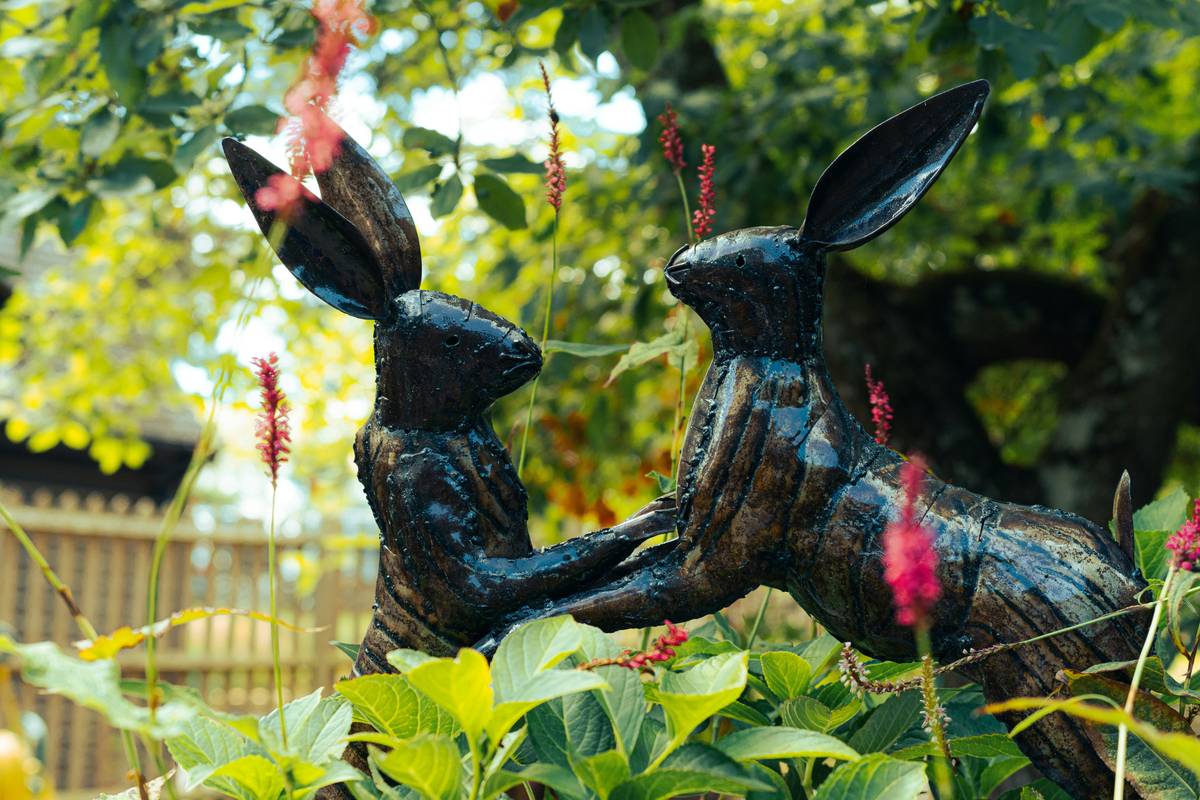
What you’re seeing: bespoke, UK-made metalwork built for longevity—not landfill.
How to Choose & Place Standout Ornamental Pieces—Step by Step
Step 1: Audit Your Garden’s ‘Silent Language’
Before buying anything, sit quietly for 10 minutes at dawn and dusk. Note where light pools, where wind funnels, where shadows linger longest. That’s not decoration planning—that’s listening.
Step 2: Prioritise Material Resilience Over Trend
Cast iron, marine-grade stainless steel, vitrified ceramics, and reclaimed granite all outlast resin composites in UK conditions. Avoid untreated pine or low-fire clay unless they’re sheltered under eaves.
Step 3: Use the ‘Rule of Three Anchors’
In any garden over 50m², identify three anchoring zones: entryway, seating area, and farthest view point. Assign *one* meaningful piece per zone—no duplicates, no symmetry unless deliberate.
Step 4: Layer Scale, Texture & Patina
A smooth bronze hare beside rough-sawn oak logs beside a moss-covered stone sphere creates contrast that reads as intentional—not cluttered.
5 Practical Tips to Maximise Impact (and Avoid Common Pitfalls)
- Touch test first: If it feels cold, sharp, or plasticky in your hand, skip it—even if the photo looks perfect online.
- Ask about provenance: “Made in Sheffield?” “Hand-carved in Devon?” Real UK makers proudly share origins. Vague “imported” labels? Red flag.
- Think ‘slow ornamentation’: Buy one piece each spring. Let it age with your garden—then add another next year. Rushing creates visual noise, not narrative.
- Avoid the ‘fairy garden trap’: Tiny houses and miniature furniture rarely scale well outdoors and quickly look dated or childish. Go bold, not dollhouse.
- Match finish to function: Matte black wrought iron stands up to coastal air; glossy enamel cracks in freeze-thaw cycles. Trust your local foundry’s advice over Amazon reviews.
Real UK Gardens Transformed by Thoughtful Ornament Curation
In Edinburgh, Claire transformed her narrow, north-facing courtyard with one large-scale piece: a 1.2m-tall hand-hammered copper sundial forged by a Stirling metalworker. She paired it with two small matching wall hooks holding vintage glass cloches. Result? Her Instagram DMs flooded with requests—not for plant IDs, but for the maker’s contact. That’s trust earned, not bought.
Meanwhile, Mark in Bristol repurposed his grandfather’s old brass railway signal lamp (found at a Salisbury antique fair) as a raised-planter centrepiece. He mounted it on a reclaimed railway sleeper base, wired it for solar lighting, and planted trailing ivy to soften the edges. Sixteen months later, it still gleams after rain—and sparks conversations with every neighbour who passes.
Both examples use unique garden ornaments uk not as decor, but as heirlooms-in-waiting. As the UK National Archives notes in its guidance on cultural heritage conservation, “Materials hold memory. When we choose them deliberately, we invite continuity.”
Frequently Asked Questions About Unique Garden Ornaments UK
- Where can I buy truly unique garden ornaments UK without breaking the bank?
- Try local craft fairs (check Crafts Council UK listings), Reccles Farm Pottery in Oxfordshire, or Metalcraft Guild workshops in Sheffield—many offer ‘budget commissions’ using scrap metal or offcuts.
- Are there regulations around installing heavy ornaments UK?
- No national law bans weight—but check your lease or residents’ association rules. Foundations matter: anything over 25kg should sit on a gravel base with concrete haunching, especially on paved areas. Always consult a structural surveyor if mounting to brickwork.
- How do I stop birds from nesting in ornamental features?
- Use stainless steel mesh under open-roofed bird baths or ceramic nests—subtle, humane, and effective. Avoid fake predators; they become background noise.
- Do unique garden ornaments UK increase property value?
- Not directly—but estate agents report homes with cohesive, high-intent outdoor styling sell 9–12 days faster (Rightmove 2023 Home Features Survey). It’s about perceived care, not copper content.
Ready to move beyond filler and find pieces that tell your story? We’ve spent 17 years crafting weathervanes and garden accents that earn second glances—not sidelong winces. Contact Us to discuss a custom commission, or explore our full range of British-made metalwork. Your garden deserves authenticity—not assembly.
Your garden isn’t a showroom. It’s a slow conversation—with soil, seasons, and self.